


Healthy Beginnings
Effective mare and foal management is the foundation for lifelong health, optimum athletic potential and client satisfaction. Understanding the key elements of peripartum care, early nutrition, preventive medicine and developmental monitoring allows you to serve as a trusted resource for equine practitioners. By providing your clients with practical, evidence-based strategies to support mare and foal health and development, you can help promote better outcomes, strengthen professional relationships and encourage proactive, comprehensive care.
Broodmare nutritional considerations
Optimal foal growth begins well before birth. Nutritional management of the broodmare influences the foal’s birth weight, immune function, musculoskeletal development and long-term performance potential.
Early pregnancy
The equine fetus grows slowly in early pregnancy, reaching only about 20% of the final birth weight by the seventh month. This means that the mare’s energy requirements don’t increase significantly during this time. While their energy requirements remain close to maintenance level, a high-quality, balanced diet is recommended to support placental development and prepare the mare for the increased energy demands she will experience in late pregnancy and lactation. Regular body condition scoring (BCS) is also important during this time to prevent weight loss or gain. The ideal range is a BCS of 5/9 to 6/9.
Last trimester
Equine fetal growth rate increases rapidly during the last three months, and the mare’s energy needs can increase by up to 30%. Specific nutritional recommendations include:
- Protein: Requirements increase to 12% to 14%; quality sources are essential.
- Energy: Gradually increasing the concentrate feed can help meet the mare’s rising energy demands, but regular BCS assessment remains imperative to prevent excessive weight gain.
- Omega-3 fatty acids: Research indicates that supplementing broodmares with omega-3 fatty acids, especially marine-derived DHA and EPA, during late gestation can improve colostrum quality, boosting passive immunity transfer to the foal.
- Vitamin A: During late gestation and early lactation, vitamin A requirements increase significantly to support fetal development and ensure proper colostrum quality.
- Vitamin E: Supplementing last-trimester broodmares with 2,500 IU/day of water-soluble, natural vitamin E can increase the mare’s serum vitamin E levels and optimize colostrum antibody transfer.
- Minerals: The correct ratio (typically 2:1) of calcium and phosphorus is necessary to support fetal skeletal development. Trace minerals, including copper, zinc, selenium and manganese, play important roles in cartilage formation, immune function and antioxidant defense.
Another consideration in the last trimester is whether the mare is grazed on pasture with tall fescue. Certain varieties of this grass are infected with a fungal organism that can lead to complications, such as prolonged pregnancy, thickened placenta, abortion, dystocia and lack of milk production. Mares should be removed from pastures containing tall fescue 60 to 90 days before foaling to avoid these issues.
Lactation
Milk production typically ranges from 2% to 3% of the mare’s body weight per day, significantly increasing her nutritional requirements. Energy, protein, calcium and phosphorus needs can nearly double during the first three months of lactation. Adequate water consumption is also vital to support milk production. Soaked mashes and salt supplementation can stimulate the mare’s natural thirst response and encourage optimal hydration.
Broodmare vaccination recommendations
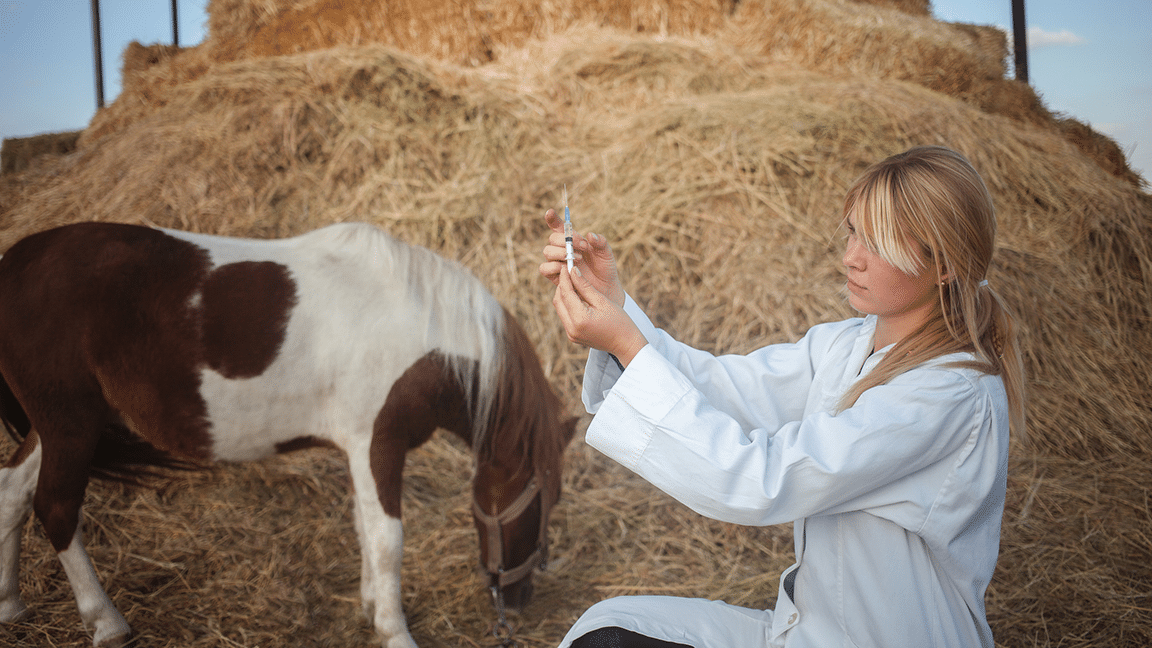
An appropriate vaccination program protects the mare and her foal from infectious diseases and enhances colostral antibody transfer. Vaccination timing is critical. Vaccinating too soon can result in declining antibody levels at foaling, while vaccinating too late may not allow sufficient time for peak colostral antibody production.
Broodmares should remain current on core vaccines recommended by the American Association of Equine Practitioners (i.e., tetanus, Eastern and Western equine encephalomyelitis, West Nile virus and rabies) leading up to pregnancy, and should receive these vaccines again four to six weeks prior to foaling.
Broodmares should also be vaccinated against Equine herpesvirus 1 (i.e., rhinopneumonitis), which is associated with abortion. Standard protocols include vaccination at five, seven and nine months of gestation.
Additional vaccines may be needed based on the mare’s geographic location and risk for particular diseases. Common risk-based vaccines include strangles, equine influenza, equine herpesvirus 4 and Potomac horse fever.
High-risk pregnancy management
Many mares foal without human intervention, but high-risk pregnancies require close monitoring to ensure the mare and foal’s safety. High-risk mares may include those with a history of abortion, placentitis, systemic illness, twin reduction, advanced age or poor body condition. Recommendations include:
- Serial ultrasound scans to assess placental thickness and fetal heart rate, movement and position
- Regular BCS assessment to ensure proper nutritional support
- Consistent turnout, minimized transport and stable herd groupings to minimize stress
- Monitoring mammary development and watching for vaginal discharge
- Preparing for early veterinary intervention and considering referral to a specialty reproductive facility
Parturition
Mares typically give birth 320 to 380 days from their last breeding date. Changes that can indicate a mare is approaching parturition include:
- Filling of the udder (two to four weeks prior to foaling)
- The tailhead muscles relax, and the abdominal area drops down (one week to one month prior)
- The teats fill with milk (two days to one week prior)
- Milk may start to drip from the teats (one day to one week prior)
- Colostrum secretions form wax-like beads on the teat ends (one to four days prior)
- The milk’s calcium concentration increases (one day prior)
- The tailhead muscles become extremely soft and loose (one-half to one day prior)
Foaling mares should typically be housed separately from other horses, and if not housed on the farm where they will foal, they should be moved to their foaling area several days to one week before their expected due date. This gives them time to adjust to the new environment and helps reduce stress. The foaling area should provide shelter from cold or wet weather and protection from predators.
If the mare has a Caslick’s in place (i.e., the vulva is partially sutured closed to prevent infection), it should be opened before foaling — ideally about one week prior to the expected foaling date — to prevent complications.
Parturition occurs in three stages:
- Stage one: Initial uterine contractions can last between 30 minutes and six hours and manifest as colic-like signs.
- Stage two: Stage two begins when the water bag ruptures, after which the foal should arrive within 20 to 30 minutes.
- Stage three: Stage three involves the passage of the placenta and should be completed within three hours after delivery.
Neonatal care
Appropriate neonatal care during the first 24 hours of the foal’s life is critical to support immune protection, musculoskeletal stability and long-term performance potential. Early care protocols and timely veterinary involvement can help optimize outcomes.
1,2,3 Rule
The 1,2,3 rule is useful to assess a newborn foal. A healthy newborn foal should stand within one hour of birth and nurse within two hours. The foal should nurse well with the tongue sealing around the nipple, and the foal actively sucking and swallowing. The mare should pass the placenta within three hours of foaling, and the placenta should be preserved so the veterinarian can assess it for abnormalities that may indicate problems for the foal.
Passive transfer of immunity
Foals are born without circulating antibodies and rely on passive transfer from the mare’s colostrum, which makes adequate colostrum intake within the first 6 to 12 hours necessary for appropriate immune protection. Failure of passive transfer increases the risk of sepsis, pneumonia, joint infections and other serious conditions. Timely IgG testing is recommended to confirm successful transfer of antibodies.
Umbilical care
The foal’s umbilical stump should be dipped shortly after birth with dilute chlorhexidine or iodine and then twice daily until the stump is dry. The area should also be closely monitored for infection, hernia or other issues.
Meconium passage
Foals should pass meconium within the first 8 to 12 hours after birth. If they don’t defecate during this time, they may have an impaction, typically resulting in signs including restlessness, tail twitching and straining.
Veterinary care
If the foal appears healthy, they should be examined by a veterinarian within 12 to 24 hours after birth. In the foal’s first week, they should remain bright, nurse frequently, and show normal curiosity and activity. Warning signs that require immediate veterinary attention include weakness or difficulty standing, reduced nursing, fever, diarrhea, nasal discharge and swollen joints.
Tips to help clients optimize foal development
By combining your product knowledge with practical application guidance, you can help equine practitioners improve foal outcomes. Specific tips include:
- Provide resources such as growth charts, tracking tools and educational materials so equine practitioners can help their clients monitor mare BCS.
- Align your messaging with veterinary guidelines in your area.
- Coordinate educational events, such as lunch-and-learns, to facilitate owner awareness concerning mare and foal care.
- Share updated research and current clinical insights.
- Align your product solutions with farm-specific goals.
Optimizing mare and foal outcomes requires intentional planning, timely intervention and appropriate management from gestation through early growth. You can be a knowledgeable partner in this process by reinforcing the importance of best nutrition practices, vaccination, high-risk pregnancy monitoring and neonatal care. These strategies will help you contribute to healthier foals, improve long-term performance and strengthen your relationships within the equine veterinary community.
- Nutrition matters early and late: Proper broodmare nutrition — especially in late gestation and lactation — supports fetal growth, colostrum quality and milk production.
- Vaccination timing is critical: Strategic scheduling protects mare and foal while maximizing antibody transfer through colostrum.
- Monitor high-risk pregnancies: Close oversight, including ultrasounds and stress reduction, helps prevent complications.
- Manage foaling carefully: Understanding parturition stages ensures timely intervention and safer delivery.
- Prioritize neonatal care: Following the 1,2,3 rule, ensuring colostrum intake and early veterinary checks supports immunity and long-term development.
Photo Credits:
istockphoto.com/Wildroze
istockphoto.com/Valeria Titarenco