


Making Behavioral Medicine More Accessible
Rather than sending behavior cases elsewhere, Ease integrates board-certified veterinary behaviorists into the primary care team, giving veterinarians real-time clinical support while strengthening client relationships.
Some cases stay with veterinarians throughout their careers. For Brandy Kuentzel, it is the memory of a young German Shepherd surrendered to an overcrowded shelter. The dog was medically healthy, but his owner felt she had run out of options to manage his behavior.
“I watched [the owner] drag him into the shelter with all four paws splayed, trying not to go inside,” Kuentzel recalled. “Then I watched her sit in her car in the parking lot and cry. I cried too.”
Behavior has been one of the leading reasons pets lose their homes for a long time. For Kuentzel, that German Shepherd gave a face to a problem she’s seen repeatedly.
By the time a family reaches that shelter door, they’ve usually tried everything they know to try. “We shouldn’t be waiting until families are in crisis,” she said. “We should be reaching them while there’s still time to change the outcome.”
After spending more than a decade at a large animal welfare organization that operated both veterinary hospitals and a shelter, Kuentzel saw a recurring challenge: Many pets were facing treatable behavioral conditions, but families often lacked access to the specialized care needed to address them.
“The frustrating part was that we already knew how to help these pets,” Kuentzel said. “Behavior problems are often diagnosable, treatable conditions, and board-certified veterinary behaviorists have spent decades figuring out what works. The problem was access.”
The shortage of veterinary behavior specialists made the challenge even greater. With millions of pets needing behavioral support and only a small number of board-certified veterinary behaviorists available worldwide, Kuentzel said the traditional approach was not scalable. Asking specialists to handle more cases or expecting primary care veterinarians to manage complex behavioral cases alone left a significant gap.
In 2023, Kuentzel co-founded Ease to address that gap by bringing veterinary behaviorist expertise into primary care settings, where pets and their families already have an established relationship with their veterinarian.
“We asked a different question,” said Kuentzel, the organization’s CEO. “How do we bring veterinary behaviorist expertise into primary care, where families already have a veterinarian they know and trust? That question became Ease.”
Bringing behavior expertise into primary care
Ease is designed to strengthen — not replace — the relationship between primary care veterinarians and their clients. Rather than referring behavior cases away from the practice, the model integrates board-certified veterinary behavior expertise into the care team while allowing the veterinarian to remain at the center of the patient’s care.
“The clinic enrolls for free,” said Kuentzel. “The veterinarian recognizes a qualifying behavior concern and refers the client to us. The client pays Ease directly, and we handle the behavior side through condition-specific behavior programs, client education, ongoing family support and, when appropriate, prescribing support from board-certified veterinary behaviorists.”
Importantly, the referring veterinarian continues to oversee the patient’s medical care, including prescribing medications
when indicated. According to Kuentzel, the collaborative approach also creates additional touchpoints that encourage clients to return to their veterinary practice for medication rechecks, annual wellness exams and recommendations for therapeutic diets or supplements.
Ease also differs from the traditional specialty referral process. While complex behavior cases are still referred directly to veterinary behaviorists, the Ease model was developed to make specialist expertise more accessible within the primary care setting.
“Traditional referral moves the patient to the specialist,” Kuentzel said. “Ease brings specialist expertise into the care team.”
To support that model, Ease’s clinical leadership includes several nationally recognized veterinary behavior experts, including board-certified veterinary behaviorists and credentialed veterinary technicians specializing in behavior, whose protocols and prescribing guidance are provided to participating veterinary practices at no cost.
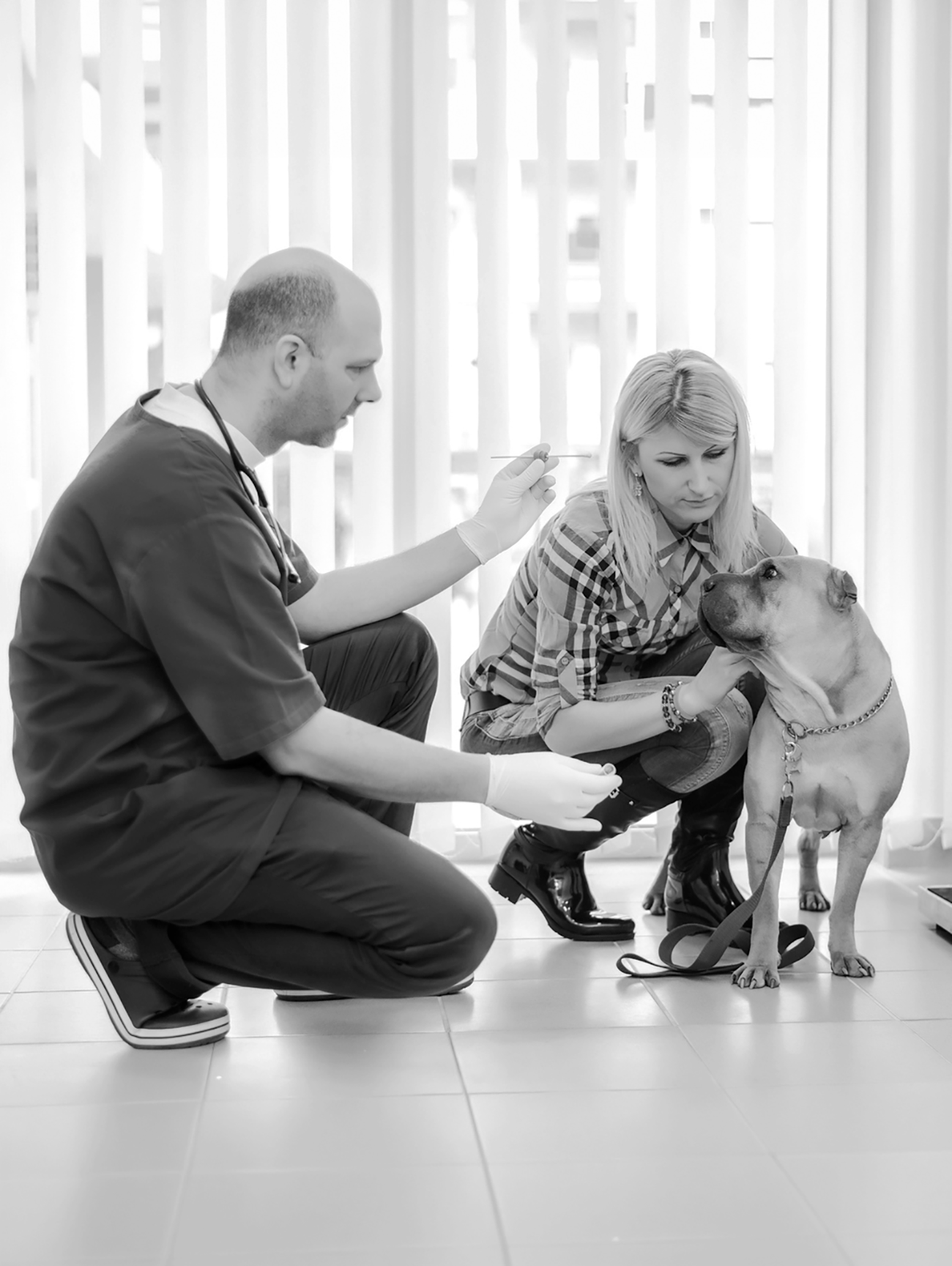
Unfortunately, behavior doesn’t fit into a neat box in the traditional appointment model of veterinary medicine. It’s complex, and frustrating, for both owner and clinician.
“It usually isn’t one more thing,” said Kuentzel. “It’s a series of things that unfold over weeks or months.”
Kuentzel believes families need help putting management in place, teaching new skills and troubleshooting setbacks. Sometimes they need medication started or adjusted. At the same time, primary care veterinarians are being asked to make medication decisions in one of the most specialized areas of veterinary medicine, often with no easy line to a board-certified veterinary behaviorist.
Kuentzel hears from primary care veterinarians across the whole spectrum. Some say, “I love behavior, I just don’t have the bandwidth.” Others say, “I hate behavior. I’m so glad I can send these cases to you.”
“Wherever they land, we meet them there,” she said.
Closing the behavioral care gap
Behavioral medicine has long been one of the most underserved areas of veterinary care. Veterinarians have long recognized the need, but have historically lacked practical pathways to address it, Kuentzel said.
“Veterinarians usually don’t ask questions they can’t act on,” she said. “Veterinary behavior was exactly that, a problem with no pathway.” Managing behavioral cases often requires specialized medication decisions, extensive client follow-up and expertise that many busy primary care practices simply don’t have the capacity to provide. As a result, many cases have traditionally been directed to trainers or behavior professionals who can offer valuable guidance but cannot diagnose medical conditions or prescribe treatment when fear, anxiety or stress are underlying factors.
Kuentzel said this has created a significant gap in care that Ease was specifically designed to fill by connecting primary care veterinarians with veterinary behavior specialists while keeping the family veterinarian at the center of treatment.

The need for behavioral support continues to grow. Based on surveys of Ease’s veterinary partners, the company estimates that at least one in 10 pets seen in primary care could benefit from behavioral care, though Kuentzel believes the true number is likely much higher because many owners fail to recognize the signs of treatable behavioral conditions.
“More people now see behavior as part of their pet’s health, and they’re asking for help,” she said. “The conversation has moved faster than access to care. That’s the gap we’re closing.”
As awareness of anxiety, fear, aggression and other stress-related conditions continues to increase, Kuentzel believes expanding access to behavioral expertise will become an increasingly important component of comprehensive veterinary care.
- Partners with primary care veterinarians rather than replacing them
- Connects general practitioners with board-certified veterinary behaviorists
- Provides behavior treatment plans, medication guidance, client education and ongoing support while the referring veterinarian remains responsible for the pet’s medical care
Behavioral care part of everyday practice
For Ease, success depends on making collaboration simple for busy veterinary teams. Rather than adding more appointments or administrative burdens, the company provides ongoing access to board certified veterinary behaviorists who support primary care veterinarians throughout a patient’s treatment.
“Our board-certified veterinary behaviorists stay available to the referring veterinarian for the whole case, including medication adjustments,” Kuentzel said. “A GP between appointments doesn’t need another scheduled call. They need an answer.”
Under the model, the primary care veterinarian remains responsible for prescribing medications while Ease manages the behavioral treatment plan, provides client education and responds to the many questions that arise between visits. The veterinary team receives updates throughout the process, allowing practices to remain actively involved without taking on the time-intensive aspects of behavioral case management.
Kuentzel believes behavioral medicine has always been fundamental to veterinary care because it directly influences an animal’s welfare, the human-animal bond and whether pets remain in their homes.
“I don’t think behavioral medicine is becoming more central,” she said. “I think we’re finally recognizing that it always has been.”
That philosophy appears to be gaining momentum across the profession. Ease won the VMX Pitch Competition in 2025, now works with clinics across more than 40 states and Canada, and serves as Purina’s behavior partner in the Pro Plan Veterinary Support Mission.
For Kuentzel, however, the mission remains deeply personal. She recalls watching a frightened German Shepherd being pulled into an overcrowded shelter because the family had nowhere to turn for behavioral support.
“The system didn’t fail because the right care didn’t exist,” she said. “It failed because the right care wasn’t there when that family needed it.”
Photo Credit:
istockphoto.com/sturti
istockphoto.com/bluecinema
istockphoto.com/Jacob Wackerhausen
istockphoto.com/sturti