


The Business Case for Sustainability
How MWI Animal Health’s delivery model is redefining value for veterinary practices.
When MWI Animal Health launched its sustainable tote delivery program from a single distribution center in Orlando, Florida, in January 2024, most observers filed it under “sustainability initiative.” Two years later, the program has expanded to 12 U.S. distribution centers, enrolled more than 4,000 customers and eliminated 718 metric tons of CO₂ emissions.
But the real story isn’t about carbon. It’s about what happens inside the clinic when the totes arrive.
“Sustainability is no longer a buzzword or feel-good practice for veterinary medicine. In today’s marketplace, it just makes good business sense,” said Julia Loew, chief commercial officer, MWI Animal Health.
That business case — the one that goes far beyond recycling — is what practices across the country are discovering as MWI’s sustainable tote delivery program and complementary order consolidation initiative reshape how veterinary teams receive, manage and think about their supply chain.
The real value of sustainability? Time.
Ask most people what reusable totes and consolidated ordering deliver, and they’ll point to the environmental numbers. But they obscure the program’s most consequential impact — giving veterinary teams their time back in an industry where every minute matters.
Staff turnover in veterinary practices can exceed 40% per year, according to industry figures. Much of that attrition isn’t driven by clinical dissatisfaction. It’s driven by operational busywork. Unpacking scattered deliveries. Breaking down cardboard. Hauling Styrofoam to the dumpster. Reconciling invoices from shipments that arrived on different days. These are the tasks that pull technicians and practice managers away from the work they trained for and care about.
Before enrolling in the tote program, Mackenzie Woolvett, RVT, clinic manager at Modern Animal — a 29-clinic companion animal practice across California, Colorado, and Texas — described a reality familiar to practices nationwide:
“We would put away orders in between seeing patients. It would sometimes take all shift, and that’s just putting away inventory,” Woolvett said. “It’s not breaking down the boxes or putting them out.”
At West Central Veterinary Services, a four-location mixed practice in Indiana, Practice Manager Jennifer Clodfelter, RVT, experienced the same pattern from a different angle — the financial toll of waste.
“We started fighting with our trash and recycling people nonstop because they wanted to charge us an astronomical amount to recycle cardboard,” said Clodfelter.
After switching to totes, West Central Vets eliminated its recycling contractor entirely, saving $175 per month.
Many practices have told MWI that running their inventory and processing orders more efficiently could save them half to a full headcount in terms of time and process management.
“By helping practices retain their workers through increased job satisfaction, we help them save on the costs of hiring and training new employees,” said Loew. “Our initiatives ultimately free employees to get back to what matters most — helping their clients and caring for their patients.”
From scattered shipments to predictable routines
The real transformation clinics experience isn’t measured only in reduced waste. It’s found in the stability and predictability they gain.
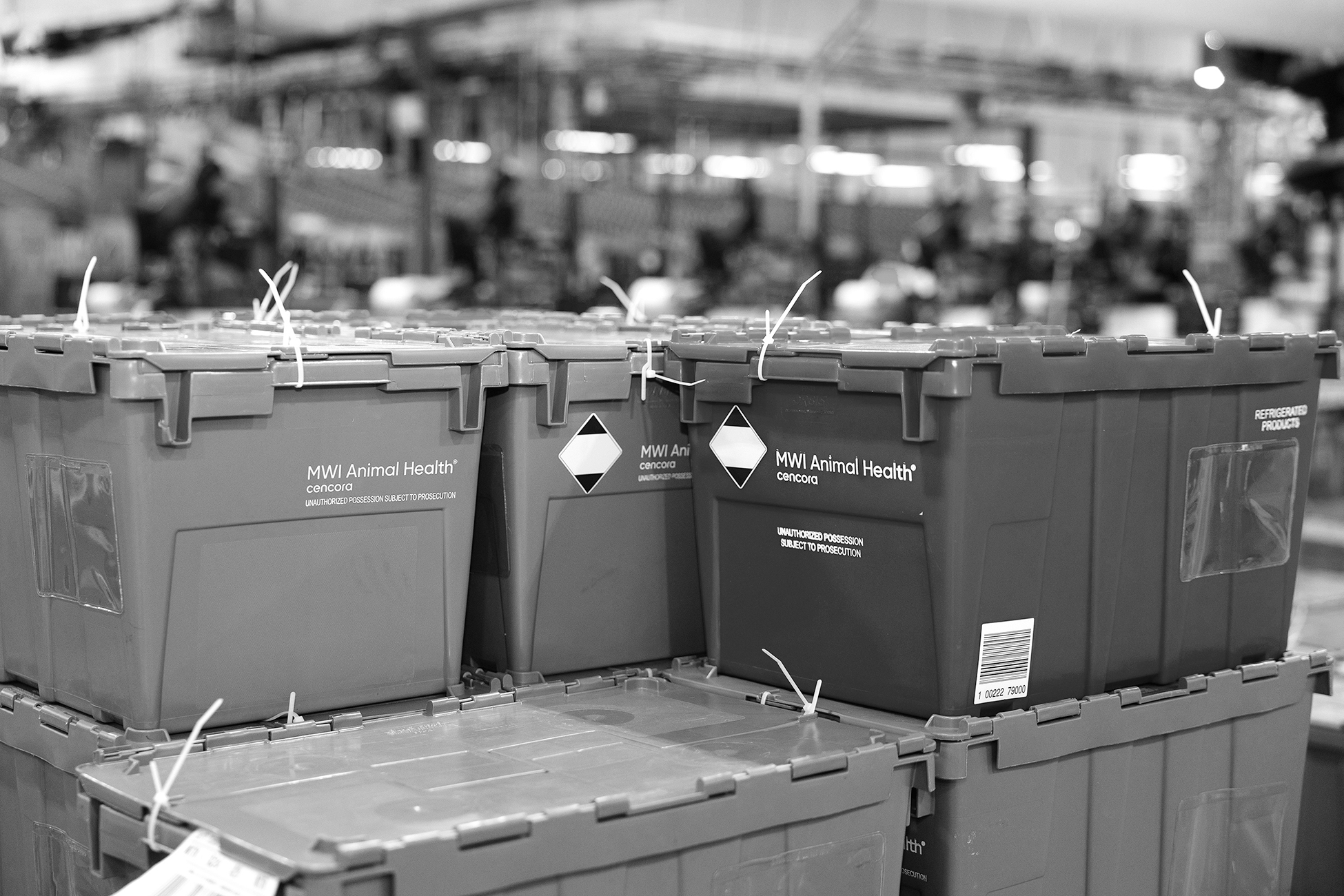
Before the tote program, deliveries arrived at irregular intervals throughout the week, forcing staff to interrupt patient care to receive, unpack and organize shipments on an unpredictable schedule. The tote program’s dedicated courier network delivers on consistent days, creating a rhythm that practices can plan around.
Woolvett said having deliveries arrive on the same days each week has been a game changer. “Now we can plan ahead, and it’s made our days so much smoother.”
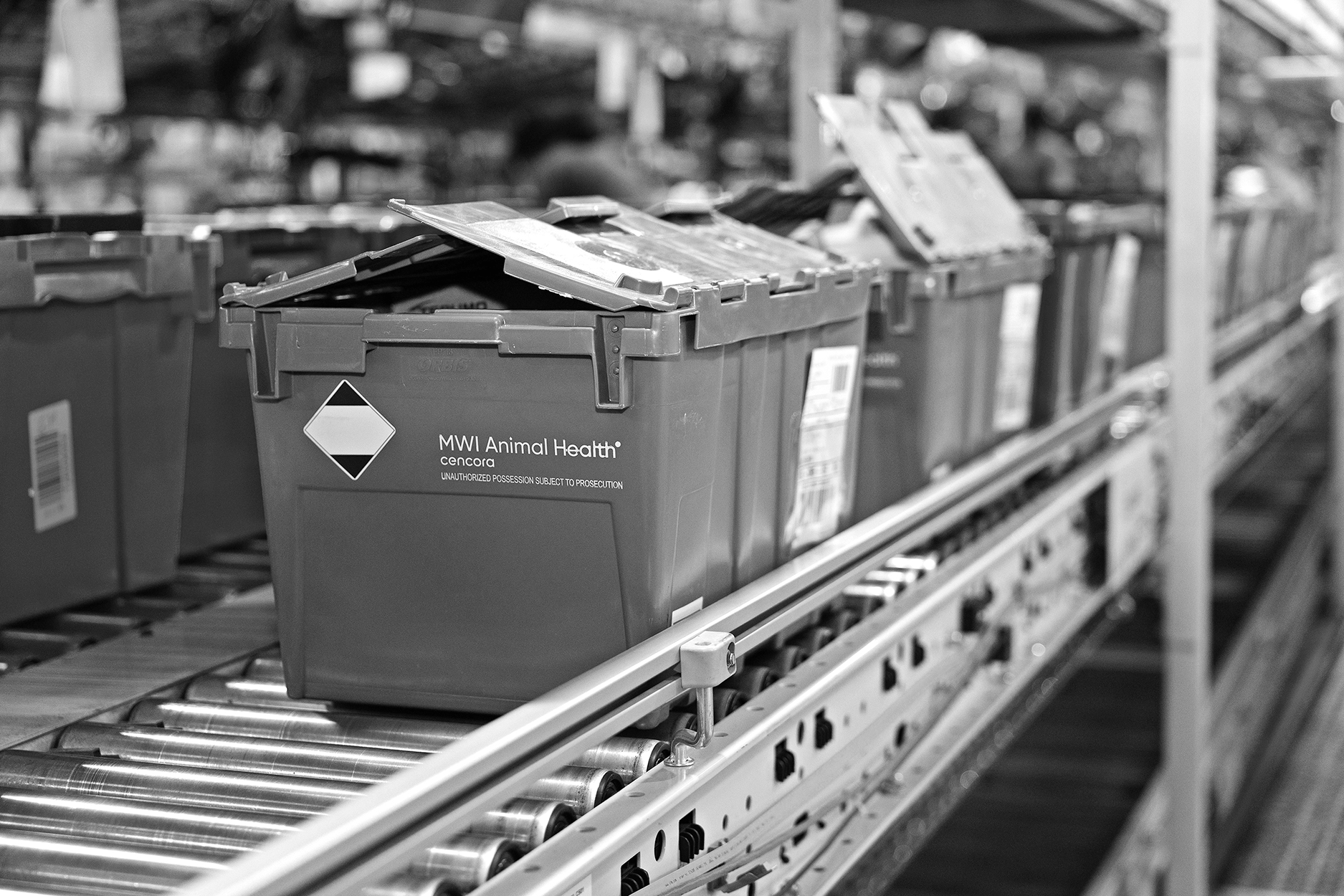
West Central Vets went from processing shipments every day to handling inventory on just two days per week. Clodfelter described the simplicity of the closed-loop model — where couriers deliver totes and pick up empty totes in the same visit — as one of the program’s biggest draws.
“Having a pile of totes that I unpack, stack up and then someone takes away was a big draw for us,” she said. “It’s much better than dealing with tons of boxes and Styrofoam all week long.”
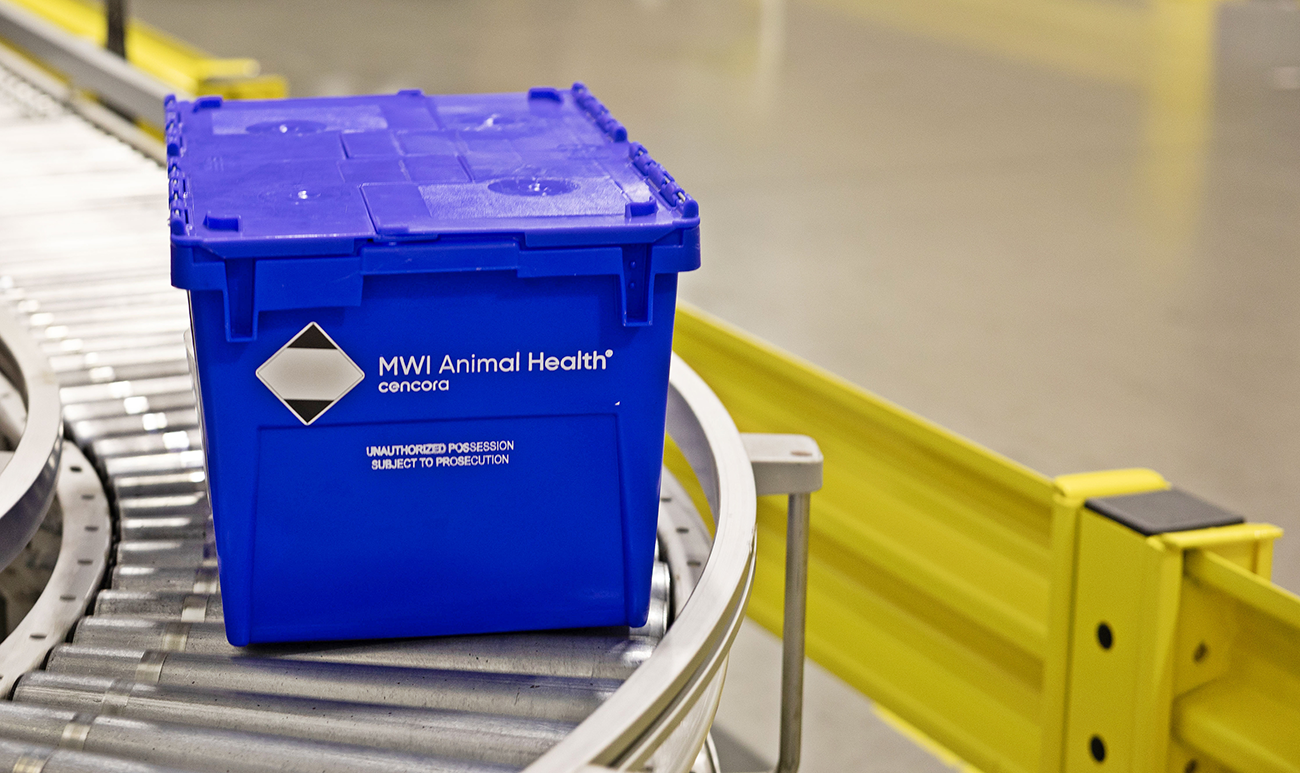
The program has also solved a persistent cold-chain challenge, reliance on single-use Styrofoam coolers. Historically, MWI used roughly 1.2 million coolers across its U.S. network. Switching to reusable cold-chain totes maintains product integrity while eliminating single use Styrofoam that clinics had no easy way to dispose of. Color-coded totes — blue for refrigerated, gray for room-temperature — provide instant visual cues that have changed how staff prioritize incoming inventory.
“The reusable totes cut the amount of unboxing and recycling time in half,” said Mallori Beeghly, MBA, RVT, GCOL, purchasing manager, Littleton Equine. “The cooler totes are a game changer, saving us from Styrofoam waste and making our workflow more efficient.”
MWI’s complementary order consolidation program — which coordinates deliveries into fewer, more densely packed shipments — has reinforced these results. For example, during the 2020 pilot, the program delivered a 19% reduction in packaging and cut 315,161 pounds of CO₂ emissions from delivery vehicles. Participating practices reported saving up to 40% of the time they previously spent managing inventory.
Combined, the programs compound each other’s impact: fewer shipments mean fewer containers, reusable containers mean less waste and lower disposal costs, and scheduled deliveries allow clinics to plan staffing around inventory rather than reacting to arrivals all week.
Behavior changes that work
Operational improvements alone don’t create lasting change. The tote program’s success required meaningful behavior shifts on both sides of the supply chain. The connecting thread is that the changes that stuck were the ones that made people’s jobs easier.
Inside clinics, the most foundational shift was moving away from unpredictable, as-needed deliveries to a more structured, planned delivery cadence. Clinics retain the freedom to order at any time, with MWI taking on the work of consolidating those requests into scheduled delivery windows on the clinic’s behalf. For urgent needs, clinics can rely on next-day delivery, ensuring time-sensitive orders are never left waiting. For distribution teams, the shift meant building an entirely new logistics model: a dedicated courier network with structured routes, delivery schedules, and pickup-and-return routines that replaced traditional carrier shipments.
MWI recognized early that sales teams needed consistent language to explain these programs in practical terms. The company’s sustainability strategy calls for a clear messaging framework — including standard talking points, FAQs and guardrails — to help teams communicate confidently without overstating environmental claims. The broader insight: sustainability initiatives are most effective when they are solutions that empower clinics to operate more efficiently, in addition to providing environmental improvements.
Perhaps the most telling indicator of the program’s design is how clinics have received it.
“Our teams are never shy about sharing their thoughts, yet when we rolled out the totes, we heard nothing,” said Christine Kjeell, former associate director of financial operations, Modern Animal. “Not a single peep. It was mind-blowing to all of us. No complaints, no resistance — just immediate adoption. That’s unheard of for us, which tells you just how much this change made sense.”
That frictionless adoption — from teams known for voicing concerns about operational changes — may be the strongest evidence that the program solves a pain point acute enough to overcome any resistance to new workflows.
Voices from the field
For the veterinary teams living with the program day to day, the impact extends beyond logistics into something harder to measure but equally important — workplace culture.
Many participating practices experience what MWI describes as the “feel-good factor” — a sense of purpose that comes from reducing environmental impact, which can positively influence workplace culture and staff engagement. In an industry hemorrhaging talent, that cultural dimension matters.
“What I hear repeatedly is that time is critical. Practices are stretched, staffing is tight and every minute matters,” said Steve Shell, president, MWI Animal Health. “So, a big part of our evolution is building solutions that give time back — simplifying workflows, reducing administrative burden and helping veterinary teams focus more of their day on caring for clients and patients.”
Woolvett, who once spent entire shifts on inventory, captured the transformation simply: “It’s amazing how much time we’ve saved. At the end of the day, we’re less stressed, and our focus is where it should be — on the animals.”
Building toward industry-wide standards
MWI’s ambitions extend beyond its own operations. The company’s sustainability strategy includes partnering with suppliers, customers and industry peers to drive aligned sustainability action through education and standards.
This approach reflects MWI’s recognition that sustainability leadership in animal health requires more than ambition. It requires proof. And that proof is already resonating with partners across the supply chain.
Mars Veterinary Health, the tote program’s founding partner, has led adoption with 85% of its locations already receiving deliveries via reusable totes.
“Mars Veterinary Health associates care about the environmental impacts of veterinary medicine, and waste and recycling are priorities to them,” said Margo Mosher, global director of sustainability, Mars Veterinary Health. “The reusable tote program helps reduce waste and engage associates on the sustainability efforts we’re making across our veterinary clinics.”
Mars Veterinary Health has set targets to cut emissions 50% by 2030 and achieve net zero by 2050. When industry leaders all move toward aligned goals, delivery practices become the connective tissue where those ambitions either materialize or stall.
“Due to our position in the supply chain, we are able to make resources and capabilities available for large manufacturer partners and suppliers as their products flow through MWI’s system,” Loew said. “This unique position is a gamechanger for sustainability solutions.”
Looking ahead
With the sustainable tote delivery program currently representing nearly 20% of monthly shipped packages across MWI’s network, the opportunity for broader adoption remains significant, delivering operational efficiency benefits and waste reduction for veterinary teams across the United States.
For veterinary practices like Clodfelter’s, however, the value is much simpler.
“The convenience of this program has been tremendous. It’s saved us time, reduced headaches and made our inventory process so much easier,” Clodfelter said. “I’d absolutely recommend it to any practice looking to simplify operations and reduce waste.”
Loew said: “To look at the big picture: the health of people and animals is so closely linked to the health of our planet, and everyone benefits when we operate in a way that delivers value and protects the environment.”
For MWI, the reusable tote isn’t just a container. It’s the physical expression of a distribution model built around a simple idea: the most sustainable solutions are the ones that make veterinary teams’ lives measurably better.
MWI has invested in dedicated leadership to drive this strategy forward, creating focused roles to oversee courier relationships, distribution center network expansion, and customer and manufacturer engagement. These investments reflect a belief that sustainability requires focused ownership — not just good intentions.
Photos courtesy of MWI Animal Health.